
Singapore Six-Digit Postal Code System
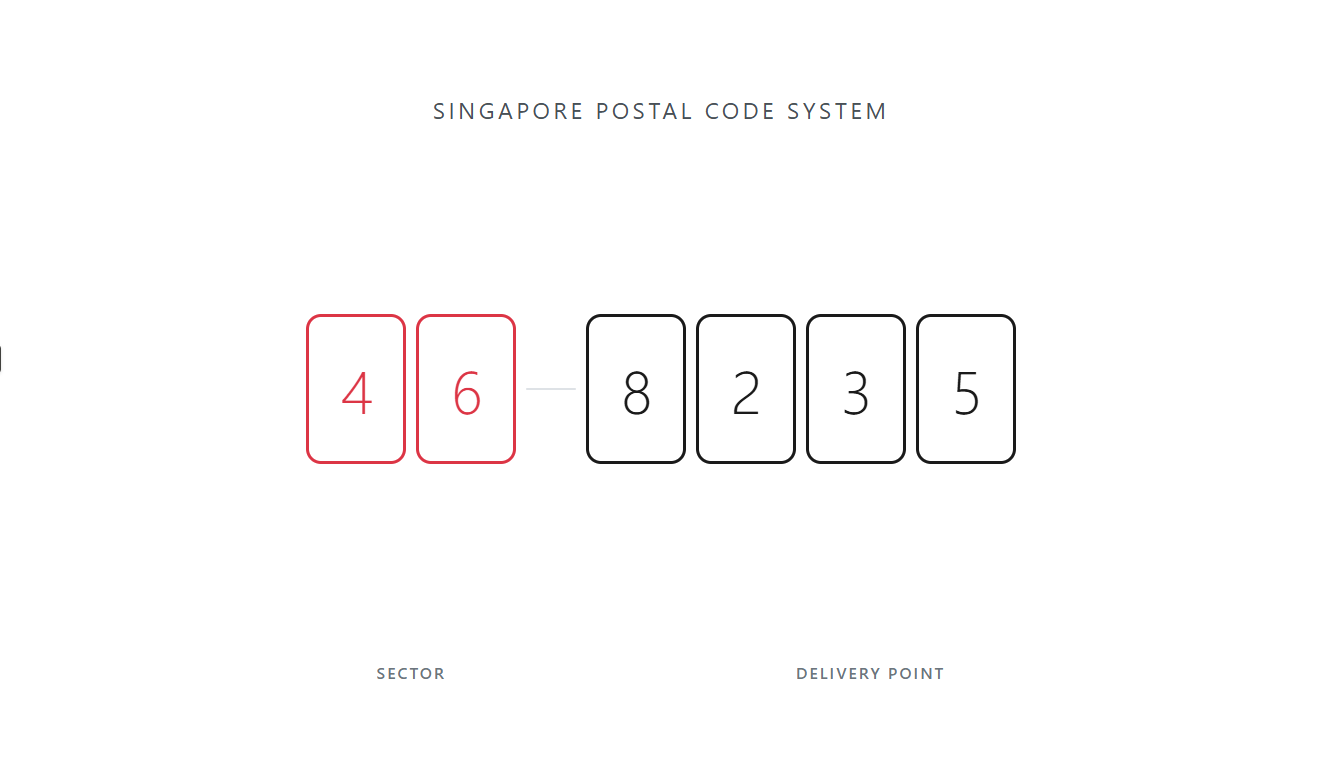
The six-digit postal code system was introduced in Singapore in 1995. It was adopted by Singapore Post (SingPost) with the aim of facilitating the automation of mail processing, in particular the mail-sorting system.
Background of the Singapore Postal Code System
The postal code system currently used in Singapore is the six-digit code. It was introduced on 1 September 19953 to replace the previous four-digit code, which required 48 percent of mail to be sorted manually. With mail volume projected to increase six percent annually, SingPost saw the need for increased automation to raise postal standards and to reduce manpower.
The new six-digit postal system enables mail to be sorted directly into the sequence of delivery for each postman, thereby reducing manual sorting to just 17 percent. However, manual sorting is still needed for incomplete addresses or if envelopes are flimsy or in odd sizes.
The six-digit system enables the generation of one million numbers to cover the unique numbers of all delivery points in Singapore. The previous system, on the other hand, could generate numbers for only 10,000 delivery points. Each delivery point – a house, building or block of flats – is given its own identifying number.
Mechanism of the Singapore Postal Codes Digits
Singapore first adopted a postal code system in 1950. The two-digit system then divided the island into 28 postal districts. This was replaced by the four-digit system in July 1979. The four-digit postal code system subdivided the then 28 districts into 80 postal sectors. The first two digits indicated the postal districts and the last two for the postal sectors.
The six-digit postal code consists of two parts: the last two digits (sector code) of the old four-digit postal code, followed by four new digits representing the delivery point within the sector. The delivery point is the residential block number (for Housing and Development Board flats), or the number assigned to a private house or commercial building. The latter number is assigned according to the alphabetical order of the street name in each sector.
State-Of-The-Art Sorting Machine For Singapore Postal Code System
Under the old system, mail was first sorted according to postal sectors. It was further sorted manually according to the postman’s beat within that sector. The postman then collected the mail for his beat and sorted it according to streets and apartment blocks, before arranging it in the sequence of delivery.
In September 1998, the mail-sorting operations at Chai Chee moved to the Singapore Post Centre located along Eunos Road. The centre houses state-of-the-art mail sorting technology that was purpose-built for mail processing. The mechanised system automatically sorts mail based on the six-digit postal code and stacks the mail in order on trays for the postmen to collect. The new system allows more mail to be delivered in a shorter time.
Preparation For The Six-Digit System
Changes So Far
By end March 1997, the usage rate of the new six-digit postal code was about 85 percent of all mail delivered. This increased to 96.3 percent in March the following year. As at 31 March 1999, the usage level had reached 98 percent, an increase of 1.8 percent over the previous year. The high level of usage has allowed Singapore Post to reap the benefits of further automation at the Singapore Post Centre in Eunos.
Singapore Address Generator
Want to generate Singapore addresses with valid 6-digit postal codes? Use our address generator tool.
Official location-data guides from the Placevy team.